skip to main |
skip to sidebar
 Let us not forget that the exterior is merely the reflection of the interior; this has already been stated by Immanuel Kant, the philosopher of Konigsberg. If we carefully study the Critique of Pure Reasoning, we certainly discover that the “exterior is the interior” (textual words of one of the great thinkers of all times).
The exterior image of a human being and the circumstances which surround him are the outcome of his self-image; these words “self” and “image” are profoundly significant.
Precisely in these moments, the photograph of James comes into my memory. Somebody took a photograph of our friend James and something interesting happened; in the photograph there appears to be two James: one that is very still, in a position of attention, with the face looking forward; the other appeared to be walking in front of him with the face in a different position. How is it possible that two James appear in one photograph?
I think that it is worthwhile to enlarge that photograph, because it might help us in order to show it to all the people who become interested in these studies. Obviously, I think that the second James would be the self-reflection of the first James, for it is written that the exterior image of a person and the circumstances which surrounds him are the outcome of his self-image.
It is also written that the exterior is merely the reflection of the interior. So, if we do not respect ourselves, if the interior image of ourselves is very mediocre, if we are full of psychological defects, of moral scum, unquestionably, unpleasant events will surge forth in the exterior world, such as economic and social difficulties, etc. Let us not forget that the exterior image of a person and the circumstances which surround him are the outcome of his self-image.

We all have a self-image. Outside of us exists the physical image that can be photographed; however, inside of us we have another image that cannot. To clarify this better, we will state that outside we have the physical and perceptible image and inside we have that image of a psychological and hyper-sensible type.
If on the outside we have a wretched and miserable image and if this image is accompanied by unpleasant circumstances, like a difficult economic situation, problems of all types, conflicts, whether at home, at work, or on the street, etc., this happens simply because our psychological image is wretched, defective and horrifying. Thus, we reflect our misery, our nothingness, that which we think we are onto our environment.
If we want to change, we need to make a total and great change. Image, Values and Identity must change radically.
In several of my books I have stated that each of us is a mathematical point in space that agrees to serve as a vehicle to a specific sum of values. Some serve as vehicles of wise values and others serve as vehicles of mediocre values. That is why each person is a different person. The majority of human beings serve as vehicles for the values of the ego, the “I.” These values can be positive or negative. Therefore, image, values, and identity are a single whole.
I stated that we must undergo a total transformation. Therefore, emphatically I affirm that identity, values and image must be totally changed.
We need a new identity, new values and a new image. This is a psychological revolution, an inner revolution. It is absurd to continue within this vicious circle in which we presently move. We need to change integrally.
The self-image of a person originates his exterior image. For the term self-image, I allude to the psychological image that we have within. What could our psychological image be? Could it be that of the irate, of the covetous, of the lustful, of the envious, of the proud, of the lazy, of the glutton, or what? Wherever the image that we have of ourselves may be, or better said, whichever our self-image would be, this interior image will originate, as is usual, the exterior image.
The exterior image of someone, even if it is well dressed, could be that of someone needy. Is the image of the arrogant one, of the one who has become obnoxious, that does not have a grain of humility, perhaps a beautiful image? How does a lustful person behave; how does he live; what aspect does his bedroom present; what is his behavior in his or her intimate life with the opposite sex; perhaps he or she is already degenerated? What could be the external image of an envious person, of someone who suffers because of his fellowman’s well-being and who secretly harms others out of envy? What is the image of a lazy person who does not want to work and is dirty and abominable? And what is the image of a glutton…?
Therefore, the exterior image is indeed the outcome of the interior image. This is irrefutable.
If a person learns to respect himself, his life will then change, not only within the field of Ethics or that of Psychology, but also within the social, economic and even political fields. But this person has to change. That is why I insist that identity, values and image must be changed.

The present identity, values and image that we have of ourselves are miserable. This is the cause of why our present social life is full of conflicts and economic problems. In this day and age, nobody is happy; nobody is joyful. Therefore, can the image, values and identity that we have be changed? Can we acquire a new identity, new values and,m and a new image? I definitely affirm that it is possible.
Unquestionably, we need to disintegrate the ego. We all have an “I.” When we knock at a door we are asked, who is it? We answer: “It’s Me.” But, who is that me? Who is that myself?
Verily, the ego is indeed a sum of negative and positive values. We must disintegrate the ego; put an end to those positive and negative values. Then we can serve as a vehicle for new values, the values of the Being. Consequently, if we want to eliminate all the values which we presently have in order to provoke a change, we need a new didactic.
-From Chapter I of “The Revolution of the Dialectic,” by Samael Aun Weor
 There exists a didactic which teaches us how to know and how to eliminate the positive and negative values which we carry within. This didactic is called Inner Psychoanalysis.
In order to know our psychological defects it is necessary to appeal to Inner Psychoanalysis. A great difficulty arises when we appeal to Inner Psychoanalysis; I want to emphatically refer to the force of counter-transference (which is this great difficulty).
We can investigate ourselves, we can introvert ourselves, but when we attempt to, the difficulty of counter-transference emerges. The solution to this difficulty lies in knowing how to transfer our attention inward, with the purpose of exploring ourselves in order to know ourselves and to eliminate the negative values which harm us psychologically, socially, economically, politically and even spiritually.
Unfortunately, I repeat, when one ties to introvert oneself in order to explore oneself and to know oneself, counter-transference immediately arises.
So counter-transference is a force which makes introversion difficult. If counter-transference did not exist, then introversion would be easier.
We need Inner Psychoanalysis; we need intimate self-investigation in order to really know ourselves. HOMO NOSCE TE IPSUM. Man, know thyself, thus thou shalt know the Universe and the Gods.
When one knows oneself, one can change. For as long as one does not know oneself, any change will become subjective. However, before anything else, we need self-analysis. How can the force of counter-transference (which makes intimate Psychoanalysis or self-Psychoanalysis so difficult) be overcome? This can only be possible by means of transactional analysis and structural analysis.

When one appeals to structural analysis, one then knows those psychological structures which make intimate introspection difficult and impossible. Thus, when we know such psychological structures we comprehend them, and by comprehending them we overcome the obstacle.
But we need something else, we also need transactional analysis. In the same manner that banks, and commercial transactions, etc., exist, so do psychological transactions.
The difficult psychic elements which we carry within our interior are subject to transactions, to exchanges, to struggles, to changes of position, etc. They are not something motionless; they always exist in a state of motion.
When one knows one's different psychological processes, one's difficult structures by means of transactional analysis, then the difficulties for psychological introspection concludes. Afterwards, the self-exploration of oneself is carried out with great success.
Whosoever achieves complete self-exploration of this or that defect, whether he explores himself in order to know his anger, his covetousness, his lust, his laziness, his gluttony, etc., can carry out a formidable psychological progress.
In order to achieve complete self-exploration, one will have to first begin by segregating the defect that one wants to eliminate from oneself in order for it to be subsequently dissolved.
A percentage of psychic Essence is liberated when a defect is disintegrated. Thus, the psychic Essence which is bottled up within our defects will be completely liberated when we disintegrate each and every one of our false values, in other words, our defects. Thus, the radical transformation of ourselves will occur when the totality of our Essence is liberated. Then, in that precise moment, the eternal values of the Being will expr3ess themselves through us. Unquestionably, this would be marvelous not only for us, but also for all of humanity.

When we achieve the total disintegration or annihilation of our negative values, we will respect ourselves and others. Thus, we will become, we might say, a fountain of kindness for the entire world, a perfect, conscious and marvelous creature.
Therefore, the mystical self-image of an awakened person will consequently or as a corollary originate the perfect image of a noble citizen. His circumstances will also be beneficial in every sense. He will be a golden link in the great universal chain of life. He will be an example for the entire world, a fountain of joy for many beings, an elightened one in the most transcendental sense of the world, someone who will enjoy a continuous and delightful ecstasy.
-From Chapter I of “The Revolution of the Dialectic,” by Samael Aun Weor
 In Mental Dynamics we need to know how and why the mind functions as it does.
Unquestionably, the mind is an instrument which we must learn to use consciously. But it would be absurd for such an instrument to be efficient for us if we first did not know the how and why of the mind.
When one knows the how and the why of the mind, when one knows the different functionalisms of the mind, then one can control it. Thus, the mind becomes a useful and perfect instrument through which we can work for the benefit of humanity.
Truly, we need a realistic system if we want to know the full potential of the human mind.
In this day and age many systems for the control of the mind exist abundantly. There exist people who think that certain artificial exercises can be magnificent for the control of their minds. Schools exist; theories about the mind are abundant; many systems exist, but how would it be possible to make something useful of the mind? Let us reflect that if we do not know the many how and whys of the mind, we will never be able to perfect it.
We need to know the different functionalisms of the mind if we want it to be perfect. How does it function? Why does it function? Those how and whys are definitive.
If, for example, we throw a stone into a lake, we will see that waves are formed. These are the reactions of the lake, of the water, against the stone. Similarly, if someone says something ironic, such a statement reaches the mind and the mind reacts against it; conflicts then subsequently arise.
The entire world is in turmoil; the entire world lives in conflicts. I have carefully observed the debate panels of many organizations, schools, etc.; they do not respect each other. Why? It is because they do not respect themselves.

Observe a Senate, a Chamber of Representatives or simply a school board: if someone says something, another feels alluded to, and becomes angry and say something even worse, then they quarrel amongst themselves and the members of the Board of Directors end up in a great chaos. This reaction of the minds of those people against the impacts of the exterior world is very serious.
One has to truly appeal to introspective psychoanalysis to explore one's own mind. It is necessary to know ourselves a little more within the intellectual sphere. For example, why do we react upon hearing the words of a fellowman. In these conditions we are always victims... If someone wants us to be content, it is enough for that person to give us a few pats on the back and tell us a few amiable words. If someone wants to see us upset, it would be enough for them to tell us a few unpleasant words.
Therefore, where is our true intellectual freedom? Where is it? We concretely depend on others; we are slaves. Our psychological processes depend exclusively upon other people; we do not rule over our own psychological processes and this is terrible.
Others are the ones who rule us and our intimate processes. For instance, all of a sudden a friend comes and invites us to a party. We go to our friend's house and he gives us a drink. We accept it out of courtesy and we drink it, however another drink follows and we also drink that one, then another, and another, until we end up drunk. Thus, our friend was the lord and master of our psychological process.
Could a mind like that be good for anything? If someone rules us, if the entire world has the right to rule us, then where is our intellectual freedom? Where is it? Suddenly, we are with a person of the opposite sex and we become very identified with this person; we end up in fornication and adultery. Conclusion, that person of the opposite sex had the upper hand and overcame our psychological processes; that person controlled us, subjected us to his or her own will. Is this freedom?
Verily, the intellectual animal, falsely called a human being, has indeed been educated to deny his identity, values and image. Where is the authentic identity, values and intimate image of each one of us? Is it perhaps the ego or the personality? No! By means of introspective psychoanalysis we can go beyond the ego and discover the Being.

Unquestionably, the Being is in himself our authentic identity, values and image. The Being is in himself the K-H, the Kosmos Human or Human Kosmos. Unfortunately, as I have already stated, the intellectual animal falsely called a human being educated himself in order to deny his inner values, has fallen into the materialism of this degenerated era. Hence, he has surrendered himself to all the vices of the Earth and treads upon the path of error.
To accept this present negative culture subjectively (inspired by our interior) by following the path of least resistance is an error. Unfortunately, people in this day and age enjoys following the path of least resistance and accept the false materialistic culture of these times; they allow it to become installed in their psyche and this is how they arrive at the denial of the true values of their Being.
-From Chapter I of “The Revolution of the Dialectic,” by Samael Aun Weor
The Laconic Action of the Being is the concise manifestation, the brief action, which in synthesis the Real Being of each one of us executes. This action is mathematical and exact, like a Pythagorean Table.
I want you to reflect very well upon the Laconic Action of the Being. Remember that above, within the infinite starry space, every action is the result of an equation and of an exact formula. Likewise, as a logical deduction, we must emphatically affirm that our true image, the Inner Kosmic Human, is beyond false values. He is perfect.
Unquestionably, each action of the Being is the result of an equation and of an exact formula.
There have been cases in which the Being has succeeded in expressing himself through someone who has achieved a change of image, values and identity. Thus, that one has in fact become a prophet, an enlightened one.
However, there have also been lamentable cases of people who have served as vehicles of their own Being and have not comprehended the intentions of the divine.
When someone serves as a vehicle of his Being and does not work disinterestedly in favor of humanity, he has not understood what an equation and an exact formula of every Laconic Action of the Being is. Only the one who renounces the fruits of action, who does not expect any reward whatsoever, who is only motivated by love in order to work, in favor of his fellow men, has certainly comprehended the Laconic Action of the Being.
I repeat, we need to undergo a total change of ourselves. Image, values and identity must change. How beautiful it is to have the image of a young terrestrial man, but what is even better is to have the spiritual and heavenly image here and now, in the flesh and bones.
Instead of possessing the negative values of the ego, we should have the positive values of the Being within our hearts and within our minds.
Commonly our identity is vulgar, yet in order to stop being vulgar, we must put our identity at the service of the Being.
Let us reflect on the necessity of becoming the living expression of the Being...
The Being is the Being and the reaon for the Being to be, is to be the Being itself. Let us clearly distinguish between what expression is and what self-expression is. The ego can express itself but it will never have self-expression. The ego expresses itself through the Personality and its expressions are subjective; it says what others have said, it narrates what others narrated, it explains what others explained, but it does not have the evident self-expression of the Being.
The real objective self-expression of the Being is what matters. When the Being expresses himself through us, he does it in a perfect and laconic way.
We have to disintegrate the ego on the basis of inner psychoanalysis in order for the Verb, the Word of the Being, to be expressed in us.
-From Chapter I of “The Revolution of the Dialectic,” by Samael Aun Weor
 Upon the mysterious threshold of the Temple of Delphi, a Greek maxim existed, which was engraved in the stone and stated: HOMO NOSCE TE IPSUM, “Man know thyself and thou shalt know the Universe and the Gods.”
In the final instance, it is obvious, evident and clear that the study of oneself and serene reflection conclude in the quietude and in the silence of the mind.
When the mind is quiet and in silence (not only in the intellectual level, but in each and every one of the forty-nine subconscious departments) then the Newness emerges. The Essence, the consciousness, comes out of the bottle, and the awakening of the soul, the Ecstasy, the Samadhi, occurs.
The daily practice of meditation transforms us radically. People who do not work on the annihilation of the “I” are like butterflies that flutter from one school to another. They have yet to find their center of permanent gravity. Therefore, they die as failures, without ever having achieved the inner Self-realization of their Being.
The awakening of the consciousness is only possible by means of liberating ourselves from mental dualism and by emancipating ourselves from the struggle of the antitheses or from intellectual surges.
Any subconscious, infra-conscious and unconscious submerged struggle is converted into an impediment for the liberation of the Essence (soul).
Every antithetical battle (as insignificant and unconscious as it might appear) indicates, accuses, and aims to obscure points which are ignored and unknown within the atomic infernos of the human being.
To reflect, observe and know these infrahuman aspects, these obscure points of oneself, is indispensable in order to achieve the absolute quietude and silence of the mind.
Only in the absence of the “I” is it possible to experience and live the Integral Revolution and the Revolution of the Dialectic.
Blue Time or Rest Therapeutics has basic rules without which it would be impossible to emancipate ourselves from the mortifying shackles of the mind. These rules are:
1. Relaxation: It is indispensable to relax the body for meditation; no muscle should remain with tension. It is urgent to provoke and to regulate drowsiness by will. It is evident that with the wise combination of drowsiness and meditation, that which is called Illumination will be the outcome.
2. Retrospection: What are we looking for in retrospection? Due to the mechanical life that he lives in, the intellectual animal forgets the Self. Thus, he falls into fascination. He goes around with his consciousness asleep, without remembering what he did at the moment of rising from his bed, without knowing the first thoughts of the day, his actions and the places he has been to.
The objective of retrospection is the acquisition of awareness of one’s behavior or actions of the past. When carrying out the retrospection, we should not put any objections to the mind; we will recall memories of past actions, from the moment of beginning the retrospection to the desired moment in our lives. We should study each memory without becoming identified with it.
3. Serene Reflection: First, before any thoughts surge, we need to become fully aware of the mood that we are in. Serenely observe our mind; pay full attention to any mental form which appears on the screen of the intellect.
It is necessary to become sentries of our own mind during any given agitated activity, and to then stop for an instant and observe it.
4. Psychoanalysis: Examine, estimate and inquire about the origin, and root of every thought, memory, affection, emotion, feeling, resentment, etc., while they emerge from within the mind.
During psychoanalysis, one must examine, evaluate, inquire, and find out the origin of, the cause of, the reason for, or the fundamental motive for each thought, memory, image and association as they emerge from the bottom of the subconsciousness.
5. Mantralization or Koan: The objectives of this phase are:
a) To mix the magical forces of mantras or koans in our inner universe.
b) To awaken the consciousness.
c) To internally accumulate christic atoms of high voltage.
In this psychological work, the intellect must assume a psychological, receptive, integral, unitotal, complete, tranquil and profound state. One achieves this unitotal receptive state with the koans or phrases that control the mind.
6. Superlative Analysis: Consists of an introspective knowledge of oneself. During deep meditation, introversion is indispensable.
In that state, one will work in the process of the comprehension of the “I” or defect that one wants to disintegrate. The Gnostic student will concentrate on the psychological aggregate and will maintain it on the screen of the mind. Above all, it is indispensable to be sincere with oneself.
Superlative analysis consists of two phases which are:
a) Self-exploration: To investigate, within the depths of our consciousness and in the 49 levels of our subconsciousness, when that the defect first manifested itself in our lives, when it last manifested itself and in which moment it has had more strength to manifest itself.
b) Self-discovery: To investigate what are the nourishing foods of the “I.” To fraction and divide the defect in various parts and to study each part in order to get to know the kind of “I’s” it originates from and the kind of “I’s” that originate from it.
7. Self-judgment: To seat the defect being studied in the defendant’s chair. To bring to judgment the damages it causes to the consciousness and the benefits that the annihilation of the defect being judged would bring into our life.
8. Prayer: One will supplicate (ask) the Divine Mother Kundalini, our inner and individual Mother, with much fervor. One will talk to her with frankness and introvert all the defects and faults that one has, so that She, who is the only one capable of disintegrating the “I’s,” will disintegrate them at their very roots.
It is pleasant and interesting to attend the meditation halls (Gnostic Sanctuaries) any time one is able to do so.
It is essential to always practice meditation with closed eyes so as to avoid external sensory perceptions.
-From Chapter I of “The Revolution of the Dialectic,” by Samael Aun Weor
 We are going to talk about the transformation of life. This transformation is only possible if one has the resolution to profoundly do it unto oneself.
Transformation signifies that one thing changes into something else. It is logical that everything is susceptible to change.
Well-known transformations within matter exist, this no one can deny. For example, sugar is transformed into alcohol and the latter is then converted into vinegar through the action of fermentation. This is the transformation of a molecular substance. One knows about the chemical life of elements, for example, when radium is slowly transformed into lead.
The alchemists of the Middle Ages spoke about the transmutation of lead into gold; nevertheless they were not always concerned with only the mere metallic physical matter. More specifically, what they wanted to indicate with such a statement was how the transmutation of the lead of the personality can be transformed into the gold of the spirit. Therefore, it is convenient for us to reflect upon all of these things.
In the Gospels, the idea of the earthly man (who is comparable to a seed that is capable of development) has the same meaning as the idea of the renaissance of the human being, or the man who has to be born again. Obviously, if the seed does not die, the plant cannot be born. Death and birth coexist in every transformation.
In Gnosis, we consider the human being to be like a factory with three floors which normally absorbs three types of nourishment.
Common nourishment, which is a matter related to the stomach, is the first type which corresponds to the inferior floor of the factory. Naturally, air is related with the second floor and this second type of nourishment corresponds to the lungs. Indubitably, impressions are associated with the third floor or the third type of nourishment and this corresponds to the brain.
Unquestionably, the food which we eat suffers successive transformations. The process of life, in and of itself, is transformation. Each creature in the universe subsists by means of the transformation of one substance into another. For example, a plant transforms water, air and the salts of the earth into new vital vegetable substances such as nuts, fruits, potatoes, lemons, etc., elements which are useful to us. Therefore, everything is about transformation.
The fermentations of nature vary because of the action of the solar light. Unquestionably, the sensitive film of life (which normally extends over the face of the Earth) conducts every universal force towards the very interior of the planetary world. Therefore, each plant, each insect, each creature and the intellectual animal himself (who is mistakenly called human) unconsciously absorb, assimilate, specific cosmic energies, which are then transformed and transmitted towards the interior layers of the planetary organism. Such transformed energies are intimately related with the whole economy of the planetary organism in which we live. Indubitably, every creature (according to its species) transforms specific energies which are then transmitted into the interior of the Earth for the economy of the world. Therefore, each creature that is in existence fulfills the same function.
When we eat a food necessary for our existence, then it is indeed transformed from one phase into another, into all of those elements which are so indispensable for our existence. Which center carries out those processes of the transformation of substances within us. Obviously, it is the Instinctual Center. The wisdom of this center is very astonishing.
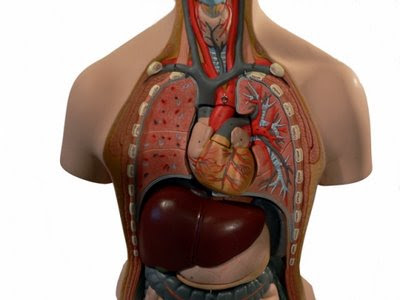
Digestion in itself is transformation. In other words, the food within our stomach, in the inferior part of this three story factory of our human organism, suffers a transformation. If something were to enter without going through the stomach, then the organism would not be able to assimilate its vitamin principles or its proteins. Thus, this would simply be indigestion.
As we reflect upon this subject, we comprehend the necessity of undergoing a transformation.
It is evident that physical food is transformed. However, there is something which invites us to reflect: does an educated center for the transformation of impressions exist within us?
No! Indeed, for the purpose of nature itself, it is not necessary whatsoever for the intellectual animal (mistakenly called human) to transform impressions. But a human being can transform impressions by himself. Naturally, he has to comprehend the reason for that necessity. We state that this is performed when one possesses an in-depth knowledge.
To transform our impressions would be magnificent. However, the majority of people, as they are seen in the field of practical life, believe that this physical world will give them what they yearn for and seek. Indeed, this is a tremendous error, because life in itself enters within us, into our organism, in the form of mere impressions. Therefore, the first thing that we must comprehend is the significance of the esoteric work which is intimately related with the world of impressions.
Do we really need to transform our impressions? Truthfully we do! This is true because one cannot really transform ones own life unless one transforms the impressions which reach the mind.
The people who read these lines must reflect on what is being stated here. We are talking about something very revolutionary, since the whole world believes that what is physical is what is real. However, if we go a little deeper, we see that what we really perceive at each instant, at each moment, are mere impressions.
If we see a person who pleases or displeases us, the first thing that we obtain from that person's character are his pleasant or unpleasant impressions, isn't that true? This we cannot deny. Therefore, life is a succession of impressions, and not just a physical thing of an exclusively materialistic type, as is believed by the learned ignoramuses. Thus, the reality of life is its impressions!
Indeed, the ideas that we are enunciating here are not easy to grasp, to apprehend. Possibly there are readers who are certain that life exists just as it is and not according to their impressions. Obviously, they are so influenced by this physical world, that this is how they think.
For example: the person that we see there, seated on a chair with this or that colored suit or the person who greets us, or who smiles at us, etc., are for us, truly real. However, if we meditate profoundly on all of them, then we will arrive at the conclusion that what is real for us are the impressions. Indeed, it is because these impressions arrive at the mind through the windows of our senses.
If we did not have senses, for instance, eyes to see, ears to hear, a mouth to taste the foods (which our organism assimilates), would then that which is called the physical world exist for us? Of course not, absolutely not.
Therefore, life reaches us in the form of impressions. Precisely, it is in these impressions where the possibility of working upon ourselves exists. Before all else, what is that which we must do? We have to comprehend the work that we must perform. How could we achieve a psychological transformation on ourselves? We do it by performing a psychological work upon the impressions that we are receiving at each instant, at each moment.
This first work receives the name of First Conscious Shock. This is related ith those impressions which are everything that we know of as the exterior world. What size then do true things, real people, have?
We need to transform ourselves internally each day. When we want to transform our psychological aspect, we need to work upon the impressions which enter into us.
Why do we call the work of the transformation of impressions the First Conscious Shock? It is because the "shock" is something that we cannot observe in a merely mechanical manner. This could never be done in a mechanical manner; one needs a self-conscious effort. It is clear that when one begins to comprehend this work, one begins to cease being the mechanical human being who only serves nature's purposes.
Now think about the meaning of everything that you are being taught here. If then, by means of your own efforts, you begin with the observation of yourself, you will then see that on the practical side of this esoteric work, everything is intimately related with the transformation of impressions and what is naturally the outcome of them.
The work, for instance, on negative emotions, on angry states, on identification, on self-consideration, on the successive "I's," on lying, on self-justification, on excuses, on the unconscious states in which we are in, is all related with the transformation of impressions and what results from it all. Regarding the significance of transformation, it is advantageous to compare the work upon oneself, in a certain manner, to a dissection. Do not forget that it is necessary to form an element of change at the place of entry of the impressions.
By means of the comprehension of this work, you can accept life as work. You will then really enter into a constant state of self-remembrance. Then, the tremendous realism of the transformation of impressions will naturally reach you. Normally, or better said supra-normally, the transformed impressions themselves would lead you to a better life, depending naturally on how concerned you are with this work. Thus, the impressions would no longer act upon you as they did at the beginning of your own transformation.
But as long as you continue thinking in the same way, that is, receiving life in the same manner, it is clear that there will be no change in yourself.
To transform the impressions of life is to transform oneself. This totally new manner of thinking helps us to carry out such a transformation. This entire dissertation is exclusively based on the radical manner of transforming oneself. Thus, if one does not transform oneself, nothing is achieved.
You will comprehend that, indeed, that life demands from us a continuous reaction towards it. Thus, all of these reactions form our personal life. Therefore, to change one's life is to really change one's own reactions towards it. Exterior life reaches us as mere impressions which incessantly force us to react, we would say, in a stereotypical way. If the reactions which form our personal life are all of a negative type, then our own life will be negative as well.

Life consists of a successive series of negative reactions which happen as incessant responses towards the impressions which reach the mind. Therefore, our task consists of transforming the impressions of life in such a manner that they do not provoke this type of negative response. However in order to achieve this, it is necessary to observe oneself from instant to instant, from moment to moment. Therefore, it is urgent to study one's own impressions.
We must not allow the impressions to reach us subjectively and mechanically. If we start having such control, we will begin a new life; we will begin to live more consciously. An individual cannot give himself the luxury of allowing the impressions to reach him mechanically. Thus, when one acts in this way, one transforms the impressions and then begins to live consciously.
The First Conscious Shock consists in transforming the impressions which reach us. If one manages to transform the impressions which reach one's mind at the moment of entry, then one obtains marvelous results which benefit one's existence.
One can always work on the outcome of impressions. Thus, indeed these impressions will conclude without mechanical effect, for this mechanicity is usually disastrous in the interior of our psyche.
This Gnostic Esoteric Work must be brought about to the point where the impressions enter. Otherwise, they are distributed to wrong places by the personality in order to evoke old reactions.

I am going to simplify this; as an example, let us use the following: If we throw a stone into a crystalline lake, impressions will then be produced in the lake and the response of those impressions produced by the stone manifest themselves in the form of waves which go from the center to the periphery.
Now, imagine the mind as a lake. Suddenly, an image of a person appears. That image, like the stone in our example above, reaches the mind. Then, the mind reacts in the form of impressions. The impressions are the outcome of the image that reaches the mind and the reactions are the responses to such impressions.
If a ball is thrown against a wall, the wall receives the impressions. Afterwards a reaction will follow, which consists of returning the ball to the one who threw it. Perhaps the ball will not be returned directly to the person, but the ball will bounce back, and that is precisely the reaction.
The world is formed by the impressions; for example: the image of a table reaches our mind through the senses. We cannot say that the table has arrived or that the table has entered or cerebrum, that is absurd. However, the image of the table is indeed inside of us. Thus our mind reacts immediately saying: this is a wooden or metal table, etc.!
Impressions which are not so pleasant also exist. For example, the words of an offender, isn't that true? Could we transform the words of an offender?
No! Because words are as they are, therefore what could we do? We must transform the imrpessions which such words produce within us. This is possible.
The Gnostic Teachings teach us how to crystallize the Second Force that is Christ within us, by means of a postulate which states: One has to receive with gladness the unpleasant manifestations of our fellow men.
Found in the previous postulate is the way to transform the impressions which the words of an offender produce within us. Receive with gladness the unpleasant manifestations of our fellow men. This postulate will naturally lead us to the crystallization of the Second Force, Christ, within us. The practice of this postulate will cause the Christ to come and take shape within us.
If from this physical world we only know its impressions, then indeed the physical world is not as external as people believe. With just reason Immanuel Kant said, "The exterior is the interior." If the interior is what matters, we should therefore transform the interior. The impressions are interior, therefore all objects and things, everything we perceive, exists in our interior in the form of impressions.
If we do not transform impressions, nothing will change within us. Lust, covetousness, pride, hatred, etc., exist in the form of impressions within our psyche which vibrate incessantly.
The mechanical outcome of such impressions have been all of those inhuman elements which we carry within and which we have normally called "I's" which, in their conjunction, constitutes the myself, the oneself.
Let us suppose, for example, that a man sees a provocative woman and that he does not transform those impressions; the result will be that the same impressions, of a lustful type, produce in him the desire of possessing her. Such a desire is the result of the impressions received, and it crystallizes, it takes shape in our psyche, and becomes one more aggregate, in other words, an inhuman element, a new type of lustful "I" which comes to add itself to the sum of inhuman elements which in their totality constitute the ego.
Anger, covetousness, lust, envy, pride, laziness and gluttony exist within us. Why does anger exist within us? Because many impressions reached our interior and we never transformed them. The mechanical outcomes of such never-before-transformed-impressions of anger form the "I's" which exist and vibrate in our psyche and which constantly make us feel angry.
Why covetousness? Indubitably, many things have awakened covetousness within us: money, jewels, all types of material things, etc. Those things, those objects, reached us in the form of impressions. We committed the error of not having transformed those impressions into different things, such as into an attraction for beauty, or into happiness, etc. Such non-transformed impressions naturally became "I's" of covetousness which we now carry within our interior.
Why do we have lust? I have already stated that different forms of lust have reached us in the form of impressions. In other words, images of an erotic type emerged from within the interior of our mind and the reaction was lust. Naturally, there was no hesitation in the outcome of that momentum. Afterwards, new morbid "I's" were born in our psyche because we did not transform those lustful waves, that unhealthy eroticism.
That is why today we have to work on those impressions and their mechanical results which we have within our interior. Thus, within ourselves we have impressions of anger, covetousness, gluttony, pride, laziness and lust. Within we also have the mechanical results of such impressions: a bunch of quarrelsome and wailing "I's" which we now need to comprehend and eliminate.
The master-work of our life consists in knowing how to transform the impressions and in also knowing how to eliminate the mechanical results of those impressions which were not transformed in the past.
Properly, the exterior world does not exist within us. What exist within us are impressions. Impressions are internal, and the reactions of such impressions are completely internal.

No one could say that he is seeing a tree in itself. He may be seeing the image of a tree but not the tree. As Immanuel Kant stated, the thing in itself is not seen by anyone. One seeds the image of things, in other words, the impression of a tree, of something, surges forth within us, and those impressions are internal, they are of the mind.
If one does perform one's own internal modifications, there is no hesitation in the outcome of that momentum. Such outcome is the birth of new "I's" which enslave our Essence, our consciousness, intensifying even more the sleepy state in which we live.
When one truthfully comprehends that everything that exists within oneself is nothing but impressions which are related to the physical world, one also comprehends the necessity of transforming those impressions. Thus, the transformation of oneself is attained by performing such a transformation.
There is nothing that hurts more than slander or the words of an offender. If one is capable of transforming the impressions which such words produce within, those impressions have no value. In other words, they remain like a check drawn against insufficient funds. Certainly, the words of an insulter do not have any more value than that which the insulted person gives to them. Therefore, if the insulted person does not give any importance to them, I repeat, they remain like a check drawn against insufficient funds. By comprehending this, one transforms the impressions of those words. For instance, they are transformed into something different, into love, into compassion for the insulter. Naturally, this means transformation. Therefore, we need to be transforming impressions incessantly, not only the ones in the present, but also the ones of the past and of the future.
Within us there exist many impressions. We committed the error of not having transformed those impressions in the past. Many mechanical results of the same impressions exist within us; they are called "I's." Now we have the disintegrate, to annihilate them, in order for our consciousness to remain free and awake.
It is indispensable to reflect on what I am stating here. Things, people, are nothing more than impressions within ourselves, within our minds. Therefore, if we transform those impressions, we transform our life radically.

For instance: when a person feels proud because of his social position, or his money, such pride, which exists within him, has as its basis ignorance. If, however, this person realizes that his social status is made up of mere mental matter (a series of impressions which have reached his mind) and he then analyzes the value of this mental matter, he comes to realize that such a position exists only in his mind in the form of impressions. Those impressions, which money and social status produce, are nothing but the external impressions of the mind. Thus, by simply comprehending that they are only impressions of the mind, a transformation of the same impressions occurs. Then, pride, by itself, declines, collapses, and humility is born within us in a natural way.
Continuing with this study of the processes of the transformation of impressions, I will proceed with something very important. For instance, the lustful image of a person reaches our mind or surges forth within our mind. It is obvious that such an image is an impression. We could transform that lustful impression by means of comprehension. It would be enough, in that instant, for us to think that that woman will one day die and that her body will become dust in the cemetery. If within our imagination we saw her body in the process of disintegration in the grave, this would be more than enough to transform that lustful impression into chastity. Because if it is not transformed, it will be added to the legion of our "I's" of lust. Therefore, it is convenient to transform the impressions which emerge in our mind by means of comprehension.
It is highly logical that the exterior world is not as external as is normally believed. Everything that reaches us from the physical world is in our interior because these are nothing but internal impressions.
No one could put a tree, a chair, a palace or a rock into his mind. Everything reaches our mind in the form of impressions. This is it.
Thus, the impressions that come from this world (which we consider to be external) are not as external as we believe. Therefore, it is unpostponable that we transform impressions through comprehension.
If someone greets us, praises us, how could we transform the vanity which this or that flatterer provokes within us? Obviously, the praises, the flattery, are nothing but impressions which reach our mind and the mind then reacts in the form of vanity. However, if those impressions are transformed, vanity then becomes impossible.
How could the words of a flatterer be transformed? It is by means of comprehension, of course. When one really comprehends that one is nothing but an infinitesimal creature in a corner of the Universe, one immediately transforms, by oneself, those impressions of praise, flattery, into something different. One converts such impressions into what they are: dust, cosmic dust, because one comprehends one's own position.
We know that the Galaxy in which we live in is made up of millions of worlds. Then, what is the Earth? It is just a particle of dust within infinity. And if we were to state that we are nothing but organic microorganisms on that particle, then what? If we were to comprehend this when were flattered, we would perform a transformation of those impressions related to the praise and flattery or adulation and as a result we would not react in the form of pride.
The more we reflect upon this, the more we will see time and again the necessity of a complete transformation of impressions.
Everything that we see as external is internal. If we do not work within the interior, then we tread upon the path of error because we are not modifying our habits. If we want to be different, we need to transform ourselves integrally. We must begin by transforming impressions. Thus, sexual transformation (transmutation) surges forth within us when we transform the animal and bestial impressions into elements of devotion.
Unquestionably, this matter of impressions deserves to be analyzed clearly and precisely. The personality that we have received or have acquired grants entrance to the impressions of life. However this personality does not transform these impressions because the personality is something practically dead.
If the impressions would impact directly upon the Essence, then it is obvious that they would be correctly transformed, because the Essence would immediately deposit them exactly in the corresponding centers of the human machine.
Personality is that term that is applied to everything that we acquire. It is clear that the personality translates impressions from all sides of life in a limited and practically stereotypical manner, according to its quality and associations.

Related to this matter, in the Gnostic Esoteric Work, the personality is sometimes compared to a terrible secretary who is at the front desk of an office, preoccupied with all the ideas, concepts, preconceptions, opinions and prejudices. It has many dictionaries, encyclopedias of all types, reference books, etc. Nevertheless, it is not in communication with the centers, in other words, with the mental, emotional and the physical centers. It is not in communication with the intellectual, motor, emotional, instinctual and sexual centers, because of its unusual ideas. Consequently or as a corollary, it so happens that the personality almost always puts itself in communication with the wrong centers. This means that the impressions that arrive are sent to the wrong centers. In other words, the personality places the impressions on centers which do not correspond to them. Naturally, this produces erroneous results.
I will make the following example so that I will be better understood. Let us suppose that a woman attends to a gentleman with a lot of consideration and respect. It is clear that the impressions which the gentleman is receiving in his mind are received by the personality and the latter sends them to the wrong centers. Normally, the personality sends them to the sexual center. Therefore, this gentleman firmly believes that the lady is in love with him. Logically, it does not take long before he rushes to make amorous insinuations to her. Indubitably, if that lady has never had that type of feeling for the gentleman, she will justly feel surprised by this. This outcome would be due to a terrible transformation of impressions. Thus, here we can see just how bad a secretary the personality really is.
Unquestionably, the life of a human being depends upon this secretary, she who seeks the transformation of impressions within her reference books without every comprehending what the event truly means. Consequently, she transmits impressions without ever taking any responsibility for what could happen. Nevertheless, the personality considers that it is accomplishing its duty. This is our internal situation.
Thus, in this allegory what is important to comprehend is how the human personality (which we acquire and which we are compelled to acquire) begins to take charge of our lives.
Unquestionably, it is useless to imagine that this happens only to certain and specific people. This happens to everyone, whoever they might be.
Through observation, one finds out that numerous characteristic reactions exist which are produced by the impressions that reach us. Unfortunately, these mechanical reactions govern us. It is clear that every person in life is governed by life itself; it does not matter if he calls himself liberal or conservative, revolutionary or Bolshevik, good or bad in any sense of the word.
It is obvious that in the presence of the impacts of the exterior world there exist reactions. Our own life is constituted by them. Therefore, based on this fact, we can emphatically state that humanity is completely mechanical.
In life, every human being has formed for himself an erroneous quantity of reactions which become the practical experiences of his existence. It is clear that every action produces their reactions, which are actions of a certain type. Such reactions are called experiences.
Thus, the ability to relax the mind would be the most essential thing for us to learn in order to get to know our actions and reactions better. This "mental relaxation" (the ability to lie down in one's bed or in a comfortable arm chair in order to patiently relax all the muscles and then to empty the mind of all thoughts, desires, emotions, and memories) is magnificent. When the mind is quiet, when the mind is in silence, we can know ourselves better. In such moments of peacefulness and mental silence, we come to really experience, in a direct manner, the crude reality of all our actions in practical life.

When the mind is in absolute repose, we can see the multitude of elements and sub-elements, actions and reactions, desires, passions, etc., as something foreign to us. These elements and sub-elements await the precise moment in which they will be able to exercise their control over us, over our personality. That is the reason why the silence and stillness of the mind is worthwhile. Obviously, the relaxation of the mind is beneficial in the most complete sense of the world, because it leads us to individual self-knowledge.
Thus, all that is life, that is to say, external life (what we see and live), is for each person his reaction to the impressions which arrive from the physical world.
It is a great mistake to think that that which is called life is a fixed, solid thing which in itself is the same for every person. Since the existing impressions related to life in the human species are infinite, we can say, without a doubt, that there does not exist a single person who has the same impressions as that of another.
Indeed, life is our impressions of it. Thus, it is clear that we can transform such impressions if we resolve to do so. But as was stated, this is an idea which is very difficult to understand or to comprehend because the hypnosis of our senses is very powerful.
Although this might appear incredible, the fact is that all human beings are in a state of "collective hypnosis." Such hypnosis is produced by the residual state of the abominable Kundabuffer organ. When the Kundabuffer organ was eliminated, what remained were the different psychic aggregates or inhuman elements which in their conjunction constitute the myself, the oneself. These elements and sub-elements, in their turn, began to condition our consciousness and keep it in a state of hypnosis. Therefore, hypnosis of a collective type exists. The entire world is hypnotized!

The mind is bottled up within the world of the five senses. The mind does not manage to comprehend how it could become independent of them. The mind believes itself to be a god.
Our internal life (the true life of thoughts and feelings) continues to be confused by our mere reasoning and intellectual concepts. Nonetheless, at the same time, we know very well that the place that we really live in is within our world of thoughts and feelings. This is something that no one can deny.
Life is our impressions and those can be transformed. We need to learn how to transform our impressions. However, it is not possible to transform anything within us if we continue to be attached to the world of the five senses.
As I have stated in my Treatise of Revolutionary Psychology, experience teaches us that if our Gnostic Esoteric Work is negative, it is due to our own fault.
It is from our sensorial point of view that we say that this or that person of the external world (whom one sees and hears through the eyes and ears) has to be blamed. This person in turn will say that we are the ones to blame. However, the fault, indeed, is in the impressions that we might have about people. Many times we think that a person is perverse when in reality the person is just a humble lamb.
It is very opportune to learn how to transform all the impressions which we may have of life. "We have to learn to receive with gladness the unpleasant manifestations of our fellowmen."
-From Chapter I of “The Revolution of the Dialectic,” by Samael Aun Weor
In the previous chapter, we learned that there exists three known types of nourishment.
1. Nourishment related with breathing.
2. Nourishment that is strictly considered comestibles.
3. And nourishment through impressions.
The outcome of respiration is the assimilation of oxygen which is so valuable for human life.
The digestion of comestibles brings upon the assimilation of the vital principles for our blood as the outcome.
The assimilation or digestion of impressions brings about as an outcome the absorption of energy that is finer than the other two.
The five senses correspond to impressions. Two types of impressions exist: pleasant and unpleasant.
The human being needs to know how to live, yet in order to do this one has to learn how to digest and to transform impressions. This is vital for comprehension.
If, indeed, we want to know how to live, then we have to transform impressions. The Hydrogen 48 is related with all the impressions that reach the mind. Unfortunately, human beings live mechanically. Human beings can transform the Hydrogen 48 into Hydrogen 24 in order to fortify the charkas. They can transform the Hydrogen 24 into Hydrogen 12 to fortify the mind and transform the Hydrogen 12 into Hydrogen 6 in order to fortify willpower.
In this day and age, one needs to transform the mind, to move it onto a new mental level. Otherwise, impressions will always continue to arrive in the wrong centers. People believe that they are able to see things from different angles and that they are almighty. However, they do not realize that their human mind is limited by their preconceptions and prejudices.
In these modern times, we need to transform our mental apparatus; we must be different, distinct. It is urgent and necessary to build a superior intellectual apparatus that will be adequate in order to transform and digest impressions.
In the same manner that the digestive apparatus has a stomach in order to assimilate the food, in the same manner that the respiratory system has lungs to assimilate oxygen, so too must a mental stomach be created by the mechanical human being. Please do not misunderstand or misinterpret this statement. This is not a bodily cellular stomach.
We have to transform impressions before digesting them. The creation of such a mental stomach is granted and facilitated by the Gnostic Teachings, consequently making the intellectual animal something different.
The necessity of transformation cannot be born without having comprehended such a necessity. This comprehension emerges when one has the Gnostic Knowledge.
When one thinks differently and positively about people, it is a sign that one is changing. We need to cease being what we are in order to become what we are not. One has to become missing to oneself. The outcome of all of this is the advent of someone who is not oneself.
On the path of the transformation of impressions, we have to be sincere with ourselves and we do not have to persuade ourselves. Justification appears in us in the beginning; however we need to study that such a justification might be the fruit of self-esteem.
We need to discover the causes and motives of our behavior while in the presence of impressions. When impressions are transformed, everything becomes new.
Only the Masters of the Occult Fraternity can immediately transform their impressions, whereas human machines do not transform them.
Those situations which were brought about through past, present and future impressions can only be modified by a conscious human being. Therefore, if people will not be capable of transforming their circumstances, they will continue being toys of circumstances and of others.
Life has an objective. A superior world is the objective of life. Thus, the Gnostic Teachings teach us how to live in a superior world, how to live in a solar and immortal humanity; if one would not accept a superior world, transformation would then not have a purpose, this is obvious.
Our mind, as it is now, is good for nothing. One needs to organize it, remodel it, furnish it, etc., in other words, to place it on a superior intellectual level.
In order to be able to transform our impressions, we need to reconstruct the scene just as it happened, to find out what hurt us the most. If there is no digestion of impressions, then nourishment from them will not be attained. If there is no nourishment, the essential bodies of the Being will languish.
The “I” is governed and nourished with the Hydrogen 48. Each day, each hour, new “I’s” are continuously being born. For instance: mosquitoes bother us, the rain also, etc. Therefore, an addition and subtraction of “I’s” always exist.
Good impressions should also be transformed. If during the day one has had three impressions which have affected his psychological mood, then they must be studied and transformed at night by utilizing an orderly procedure. Each “I” is connected with others; they are associated. The “I’s” conjoin together in order to form the same scene.
We have to be analytical and judicious in order to transform impressions, so that new faculties will appear as an outcome. When people do not transform themselves, they continue to have a shameful and ludicrous psychological state. One is devolving if the digestion of impressions does not exist.
Therefore, we have to digest the impressions the same day… Do not permit the sun to set on your anger! We have to see things as they are. We have to create the convenient mental apparatus or the mental stomach in order to not become victims of anything.
The System for the Transformation of the Impressions of the Day
1. Absolute relaxation.
2. Reach the state of meditation.
3. Relive the scene just as it occurred.
4. Seek within oneself the “I” which caused the problem.
5. By observing serenely, one places the ego in the defendant’s chair and one then proceeds with the judgment.
6. Ask the Divine Mother Kundalini for the disintegration of the “I” – problem.
-From Chapter I of “The Revolution of the Dialectic,” by Samael Aun Weor


